

Introduction
Exterior finishes play a major role in protecting buildings from weather, temperature fluctuations, moisture, pollution, and environmental wear. As climate conditions become more unpredictable, property owners, architects, and builders are placing greater emphasis on climate-smart exterior finishes that improve durability while reducing long-term maintenance costs.
Traditional exterior materials often struggle against intense sunlight, heavy rain, humidity, freezing temperatures, and air pollution. Over time, these environmental pressures can cause fading, cracking, warping, corrosion, and structural deterioration. Climate-smart finishes are specifically designed to withstand these challenges while maintaining visual appeal and performance for many years.
Modern exterior systems combine advanced materials, sustainable technologies, and weather-resistant engineering to improve building longevity. Whether for residential homes, commercial buildings, or industrial facilities, climate-responsive finishes have become essential for long-term property protection and efficiency.
Understanding Climate-Smart Exterior Finishes
Climate-smart exterior finishes are materials and coatings engineered to perform effectively under specific environmental conditions. These finishes help buildings resist climate-related damage while improving energy efficiency and reducing environmental impact.
Unlike conventional finishes that focus primarily on appearance, climate-smart systems prioritize:
- Weather resistance
- Moisture control
- UV protection
- Thermal efficiency
- Structural durability
- Low maintenance requirements
- Sustainability
The goal is to create exterior surfaces capable of adapting to changing environmental conditions without rapid deterioration.
Why Exterior Longevity Matters
Exterior deterioration affects more than aesthetics. Damaged finishes can compromise structural integrity, increase maintenance expenses, and reduce property value.
Long-lasting finishes provide several advantages:
- Reduced repair costs
- Improved energy efficiency
- Enhanced moisture protection
- Better insulation performance
- Increased building lifespan
- Lower environmental impact
In regions experiencing extreme climate conditions, durable exterior systems are becoming a necessity rather than an upgrade.
Climate Factors That Affect Exterior Surfaces
Different climates create different challenges for buildings. Understanding local environmental conditions helps determine the most effective exterior finish systems.
Intense Sun Exposure
Strong UV radiation can cause:
- Paint fading
- Material brittleness
- Surface cracking
- Heat absorption
Regions with prolonged sunlight require UV-resistant coatings and reflective finishes that minimize thermal stress.
Heavy Rain and Humidity
Moisture is one of the leading causes of exterior damage. Excess humidity and rainfall contribute to:
- Mold growth
- Wood rot
- Paint peeling
- Corrosion
- Structural weakening
Water-resistant finishes and breathable materials help manage moisture without trapping condensation.
Freeze-Thaw Cycles
Cold climates create expansion and contraction cycles that weaken exterior surfaces over time.
Freeze-thaw damage often results in:
- Cracked masonry
- Concrete deterioration
- Surface separation
- Sealant failure
Flexible coatings and durable sealants improve resistance to temperature fluctuations.
Coastal Conditions
Salt exposure and high humidity accelerate corrosion and surface degradation near coastal environments.
Climate-smart coastal finishes often include:
- Corrosion-resistant metals
- Protective marine-grade coatings
- Moisture barriers
- Salt-resistant paints
High-Performance Exterior Paint Systems
Exterior paint technology has evolved significantly in recent years. Modern climate-smart paints offer stronger protection and improved durability compared to traditional formulations.
Acrylic Paints
High-quality acrylic paints are widely used because they offer:
- Excellent UV resistance
- Moisture protection
- Flexibility
- Color retention
- Crack resistance
Acrylic coatings perform particularly well in regions with fluctuating temperatures.
Elastomeric Coatings
Elastomeric finishes create flexible protective membranes that expand and contract with building movement.
Benefits include:
- Waterproofing capabilities
- Crack bridging
- Enhanced durability
- Long-term weather protection
These coatings are commonly applied to stucco, concrete, and masonry surfaces.
Sustainable Exterior Cladding Options
Exterior cladding provides an additional protective layer while improving insulation and aesthetics.
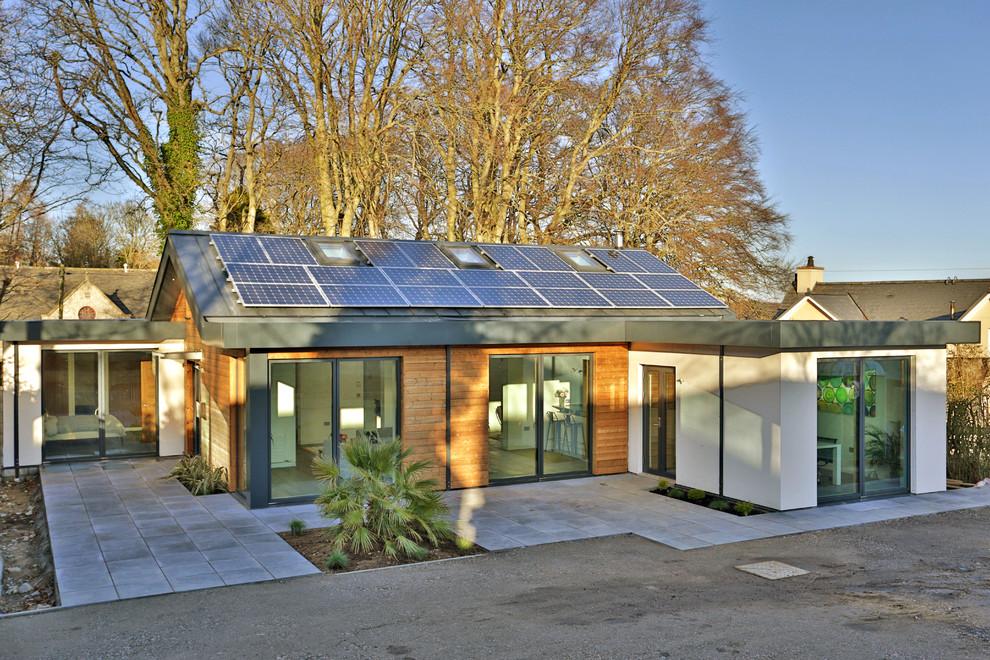
Modern Climate-Resistant Exterior Architecture
Fiber Cement Siding
Fiber cement has become one of the most popular climate-smart cladding materials.
It offers:
- Fire resistance
- Moisture resistance
- Pest resistance
- Long service life
- Minimal maintenance
Fiber cement performs well across diverse climate zones because it resists warping, swelling, and cracking.
Engineered Wood Siding
Engineered wood combines the appearance of natural wood with improved durability.
Advantages include:
- Better moisture resistance
- Increased dimensional stability
- Reduced maintenance needs
- Sustainable sourcing options
Advanced treatments help engineered wood withstand harsh environmental exposure.
Metal Cladding
Metal systems are increasingly used in modern residential and commercial projects.
Common options include:
- Aluminum
- Zinc
- Steel
- Copper
Climate-smart metal finishes feature corrosion-resistant coatings that improve longevity in humid and coastal regions.
Reflective and Cool Roof Finishes
Roof surfaces experience intense heat exposure, making them critical components of climate-smart design.
Reflective roofing materials reduce heat absorption and improve energy efficiency.
Cool Roof Coatings
Cool roof technologies use reflective pigments that lower surface temperatures.
Benefits include:
- Reduced indoor heat gain
- Lower cooling costs
- Extended roof lifespan
- Improved urban heat management
These systems are especially valuable in hot climates with prolonged sun exposure.
Solar-Reflective Shingles
Modern shingles now incorporate reflective granules that improve thermal performance while maintaining traditional aesthetics.
This approach helps homeowners increase efficiency without sacrificing visual design.
Moisture Management Systems
Moisture control is essential for long-term exterior durability.
Climate-smart moisture systems typically include:
- Waterproof barriers
- Drainage planes
- Ventilated facades
- Vapor-permeable membranes
Proper moisture management reduces the likelihood of mold growth, insulation failure, and structural deterioration.
Rainscreen Systems
Rainscreen facades create air gaps between cladding and wall assemblies.
This design improves:
- Water drainage
- Ventilation
- Thermal performance
- Moisture evaporation
Rainscreen systems are widely used in climates with heavy rainfall and humidity.
Low-Maintenance Exterior Finishes
Long-lasting exterior systems should minimize maintenance demands while maintaining structural performance.
Popular low-maintenance finishes include:
- Powder-coated metal
- Composite siding
- High-performance masonry sealants
- UV-resistant paints
- Ceramic-infused coatings
Reducing maintenance frequency lowers long-term ownership costs and environmental waste.
Energy Efficiency and Thermal Performance
Climate-smart finishes contribute to overall building efficiency.
Thermally efficient materials help:
- Stabilize indoor temperatures
- Reduce HVAC demand
- Lower energy costs
- Improve occupant comfort
Exterior insulation systems are becoming increasingly common in energy-conscious construction.
Insulated Cladding Systems
Insulated exterior systems combine thermal barriers with weather-resistant finishes.
These assemblies improve:
- Energy performance
- Moisture control
- Structural durability
Proper insulation also reduces thermal bridging, which contributes to energy loss.
Smart Coating Technologies
Advanced coating technologies continue transforming exterior building performance.
Self-Cleaning Coatings
Some modern finishes use nanotechnology to repel dirt, pollutants, and moisture.
These surfaces reduce staining and maintenance requirements.
Anti-Microbial Finishes
Anti-microbial coatings help prevent mold and mildew growth in humid environments.
This improves both durability and hygiene.
Heat-Reflective Coatings
Heat-reflective technologies reduce solar heat absorption, protecting exterior materials from thermal stress.
These coatings improve lifespan while supporting energy efficiency goals.
Sustainability and Environmental Responsibility
Climate-smart exterior finishes increasingly align with sustainable construction practices.
Environmentally responsible materials often feature:
- Recycled content
- Low VOC emissions
- Renewable sourcing
- Long product life cycles
- Reduced maintenance needs
Sustainable finishes help lower environmental impact while improving long-term building resilience.
Reduced Material Waste
Durable exterior systems require fewer replacements over time, reducing construction waste and resource consumption.
Longevity itself has become a key sustainability factor in modern architecture.
Choosing the Right Exterior Finish
Selecting the right finish depends on several factors.
Important considerations include:
- Regional climate conditions
- Sun exposure levels
- Rainfall patterns
- Wind exposure
- Maintenance expectations
- Energy efficiency goals
- Budget requirements
A finish that performs well in dry desert climates may not be suitable for humid coastal regions.
Professional assessment and climate-specific planning improve long-term performance outcomes.
Common Mistakes in Exterior Finish Selection
Some property owners prioritize appearance over durability, leading to premature failure.
Common mistakes include:
Ignoring Climate Conditions
Materials not designed for local weather patterns often deteriorate quickly.
Poor Installation Practices
Even high-quality finishes fail when improperly installed.
Inadequate Moisture Protection
Lack of proper drainage and ventilation increases the risk of hidden damage.
Choosing Low-Cost Materials
Short-term savings may result in higher maintenance and replacement expenses later.
Long-term performance should remain the primary consideration during material selection.
The Future of Climate-Smart Exterior Finishes
Exterior finish technologies will continue evolving as climate conditions become more demanding.
Future innovations may include:
- AI-enhanced building materials
- Advanced nanocoatings
- Carbon-absorbing surfaces
- Smart temperature-regulating facades
- Ultra-durable bio-based materials
As sustainability standards increase, exterior systems will likely combine environmental performance with advanced durability engineering.
Buildings of the future will rely heavily on adaptive materials capable of responding dynamically to environmental conditions.
Conclusion
Climate-smart exterior finishes are becoming essential components of modern construction and renovation projects. These advanced systems provide long-term protection against environmental stress while improving energy efficiency, sustainability, and property value.
From UV-resistant paints and reflective roofing systems to moisture-managed facades and durable cladding materials, climate-responsive finishes help buildings withstand increasingly challenging weather conditions.
Choosing the right exterior finish involves more than aesthetics. It requires careful consideration of climate exposure, material performance, maintenance expectations, and long-term durability.
As climate pressures continue shaping the built environment, resilient and sustainable exterior finishes will remain critical for protecting structures and extending their lifespan.
FAQ
What are climate-smart exterior finishes?
Climate-smart exterior finishes are materials and coatings designed to withstand environmental conditions such as heat, moisture, UV exposure, and temperature fluctuations while improving durability and energy efficiency.
Which exterior finish lasts the longest?
Fiber cement siding, high-performance metal cladding, and advanced acrylic coating systems are among the most durable exterior finish options available today.
Are climate-smart finishes energy efficient?
Yes. Many climate-smart finishes improve insulation, reflect solar heat, and reduce energy consumption by stabilizing indoor temperatures.
What is the best exterior finish for humid climates?
Moisture-resistant materials such as fiber cement, engineered wood, and ventilated rainscreen systems perform well in humid environments.
How do reflective roof coatings work?
Reflective coatings reduce solar heat absorption by reflecting sunlight away from the roof surface, helping lower indoor temperatures and cooling costs.
Do climate-smart finishes require less maintenance?
Many climate-smart finishes are specifically engineered for low maintenance and long-term performance, reducing repair and replacement frequency.
Why is moisture management important for exterior durability?
Proper moisture management prevents mold growth, rot, corrosion, insulation damage, and structural deterioration caused by trapped water or humidity.

Comments are closed.