

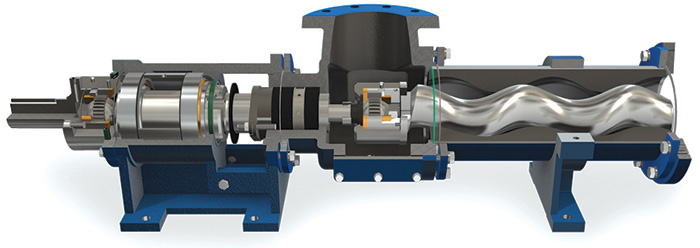
Progressing cavity pumps, often referred to as PC pumps, are a cornerstone in industries that demand precise fluid handling. From wastewater treatment to food processing and chemical applications, these pumps are valued for their ability to transport viscous, abrasive, and shear-sensitive fluids efficiently. Engineers rely on them not only for their robust performance but also for their versatility in handling complex pumping tasks. This guide provides an in-depth understanding of how progressing cavity pumps work, their components, applications, and maintenance best practices.
How Progressing Cavity Pumps Work
Progressing cavity pumps operate on a simple yet effective principle. They consist of a helical rotor that rotates within a double helical stator, creating cavities that progress along the pump as the rotor turns. This design allows the pump to move fluids smoothly and continuously with minimal pulsation.
As the rotor turns inside the stator, cavities form at the suction side, trapping the fluid. These cavities then move along the length of the pump, maintaining a consistent volume while the fluid is transported toward the discharge side. This mechanism enables PC pumps to handle high-viscosity fluids without causing excessive shear, making them ideal for applications where fluid integrity is critical.
Key Components of a PC Pump
Understanding the components of a progressing cavity pump is essential for engineers tasked with selecting, installing, or maintaining these systems. The main components include:
Rotor
The rotor is the heart of a PC pump. Typically made from hardened steel or corrosion-resistant alloys, it is designed with a single or multi-start helical geometry. The rotor’s rotation within the stator creates the cavities that carry fluid from suction to discharge.
Stator
The stator is a stationary component with a helical cavity that matches the rotor. It is usually made from elastomeric materials, which allow a tight seal with the rotor, ensuring minimal backflow and high volumetric efficiency. The choice of elastomer depends on the fluid’s chemical properties and operating temperature.
Drive Shaft and Coupling
The drive shaft connects the rotor to the motor, transmitting rotational energy while allowing slight flexibility to accommodate misalignment. Couplings help absorb vibrations, ensuring smooth operation and reducing wear on the pump.
Sealing Systems
Sealing systems in PC pumps are critical to prevent leaks and maintain efficiency. Mechanical seals, lip seals, or packing systems are commonly used depending on the fluid and operating conditions. Proper seal selection can prevent contamination and reduce maintenance costs.
Applications of Progressing Cavity Pumps
The unique design of PC pumps makes them suitable for a wide range of applications across different industries. Some common applications include:
Wastewater Treatment
Progressing cavity pumps are widely used for sludge handling, thickened waste transport, and dosing chemicals. Their ability to handle abrasive solids without clogging makes them ideal for municipal and industrial wastewater treatment plants.
Food and Beverage Industry
PC pumps can gently handle viscous food products such as syrups, sauces, and dairy without compromising their quality. Their low shear operation ensures that delicate fluids maintain their texture and consistency.
Chemical and Pharmaceutical Processing
In chemical manufacturing, PC pumps transport corrosive and viscous liquids safely and efficiently. Their precise volumetric flow control makes them ideal for dosing and metering applications in the pharmaceutical and chemical sectors.
Oil and Gas Industry
PC pumps are employed to transport crude oil, drilling mud, and other hydrocarbons. Their ability to handle viscous fluids and solids without pulsation ensures a steady flow rate and reduces operational downtime.
Advantages of Using PC Pumps
Progressing cavity pumps offer several advantages that make them a preferred choice for engineers:
Consistent Flow
Unlike centrifugal pumps, PC pumps provide a steady, non-pulsating flow, which is crucial for applications requiring precise dosing.
Versatility in Fluid Handling
PC pumps can handle fluids with varying viscosities, solids content, and abrasiveness. This makes them highly adaptable across industries.
Low Shear Pumping
The gentle pumping action of PC pumps ensures that shear-sensitive fluids are transported without damage, preserving product quality in food and chemical applications.
Self-Priming Capability
PC pumps can self-prime, allowing them to handle fluids from dry or empty suction lines, which increases operational flexibility.
Maintenance and Troubleshooting
Proper maintenance is vital to maximize the lifespan and efficiency of a PC pump. Key maintenance tips include:
Regular Inspection
Check the rotor, stator, and seals regularly for wear or damage. Early detection can prevent costly breakdowns.
Lubrication
Ensure that the drive system and any external bearings are adequately lubricated to reduce friction and wear.
Alignment Checks
Proper alignment of the drive shaft and rotor prevents excessive vibration and uneven wear on the stator.
Seal Replacement
Replace worn seals promptly to avoid leaks and maintain volumetric efficiency.
Handling Common Issues
PC pumps may experience issues such as reduced flow rate, increased vibration, or leakage. These problems are often linked to wear, misalignment, or improper installation. Engineers should address these issues by inspecting the components, verifying alignment, and replacing worn parts as needed.
Progressing cavity pumps, or PC pumps, are an indispensable tool in modern engineering, offering reliable, precise, and gentle fluid handling across a variety of industries. Understanding how these pumps work, their components, and their maintenance requirements allows engineers to optimize performance, reduce downtime, and extend the lifespan of their equipment. By leveraging the advantages of PC pumps, industries can achieve consistent results in even the most demanding applications

Comments are closed.